
The Rosary
Catholic Primary School
English Reading
Teaching Children to Read
“If you are going to get anywhere in life you have to read a lot of books.”
Roald Dahl
Our Reading Intent
At the Rosary, reading lies at the very heart of our Catholic community. Reading threads through our curriculum as well as supporting scripture study and spiritual development. Our reading strategy ensures all children are able to leave the Rosary as fluent, life-long readers who are ready for the next stage of their education and spiritual journey. Our approach to teaching reading is an equitable one: we secure a research informed universal provision and additional ‘targeted’ academic strategies for those children at risk of underachievement. This way we can be sure that our reading strategy is built around love. inclusivity, aspiration, curiosity and respect.
Reading Implementation
We believe that laying the foundations for a life-long love of reading is core to the happiness of our children and we therefore promote this across all curriculum areas using a high quality text approach. In the Early Years and Key Stage One we ensure the delivery of our Synthetics Phonics Programme (Read, Write Inc) is supported by high quality phonetically matched books that children take home to celebrate with their families. Across EYFS, KS1 and KS2 our children will share carefully selected high quality texts linked to the school’s curriculum and writing strategy. These texts are carefully pitched using UKLA (UK Literacy Association) shortlist of recommended books, our 'Reading Spine' and research by The Book Trust amongst others. We ensure our choices include popular children’s authors, classics from our rich culture heritage and a wide range of non-fiction and poetry. In addition, all children are assessed through PM Benchmarking and then directed to select a banded book to take home and share with their families. We are currently investing in significant improvements to our book-banded library. Our aim is to provide all our pupils with lots of choice of high quality texts throughout their time at the Rosary.
Developing Early Reading
Universal Provision for Word Reading
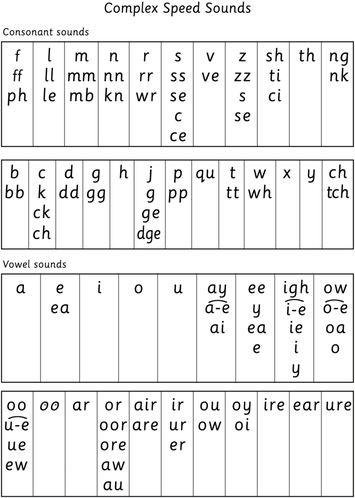
At our school we use Read, Write Inc systematic, synthetic phonics to teach our phonic programme. In EYFS, Year 1 and into Year 2, daily reading sessions are based around Read, Write Inc programme. This promotes pupils’ phonics knowledge and decoding at word level, developing reading fluency, and using the alphabetic code to encode for spelling. Children engage in reading a variety of Read, Write Inc phonic books matched to the progression on a one to one basis. Comprehension and reading for pleasure are developed through reading a whole class book on a daily basis.
Targeted Academic Support for Word Reading
We use Read, Write Inc to regularly assess children’s progress in phonics. Sometimes it is necessary to provide extra support for our children with word reading. For this, we use Fast Track to ensure all children are able to read fluently using recall of their phonic knowledge. Teachers ensure that children at risk of underachievement have daily one to one reading which is carefully tracked.
For more information use this link to access the Read, Write Inc. guide for parents: Parent guide to Read Write Inc. Phonics | Oxford Owl
Whole Class Guided Reading
Universal Approach for Comprehension
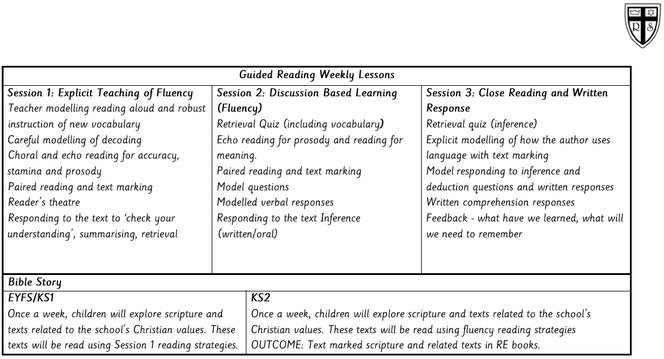
Children across the school have, on average, 3 taught reading sessions a week. These are whole class reading sessions which are a balance between practising reading fluency, discussion based learning and written comprehension. As well as this, children are regularly heard reading aloud by an adult in EYFS/KS1 and as regularly as possible in KS2.
From Year 2 to Year 6, the children take part in three whole-class reading sessions per week. A high-quality text extract from our chosen reading scheme ‘Reading Explorers’ and other supplementary resources is used for all three sessions with a different reading focus each day. These whole class reading sessions ensure a balance of reading fluency (accuracy, stamina, prosody), discussion based learning and written comprehension. Teachers ensure a balance by covering fiction, non-fiction and poetry across each term.
Whole-class reading sessions mean that all children are immersed in the same high-quality literature and the discussions that these texts promote. The whole class can share the enjoyment of a particular text and learn from one another as well as the adults in the room. Children are organised into mixed-ability pairs so as to allow for frequent, paired discussion and collaboration in the acquisition of new skills. High quality inclusive teaching strategies are deployed using the EEF’s 5 a-day guidance to adaptive teaching.
Targeted Academic Support for Comprehension
At the Rosary, in addition to our universal offer for teaching comprehension, we aim to ensure our children at risk of underachievement keep up and, when necessary can catch up.
Robust diagnostic assessment informs our targeted support (see Reading Assessment)
The follow strategies are used for targeted academic support for comprehension.
- Nessy
- Dancing Bears
- High frequency words recall programme – assessed 2-3 times a week and once per term
- Neale reading assessment for accuracy
- Pre-teaching vocabulary
- Daily one-to-one reading for meaning
- Speeding up word reading
- Weekly fluency intervention using explicit teaching of fluency pedagogy
Vocabulary
Universal Provision for Vocabulary
The acquisition of vocabulary is central to our approach to the teaching of reading. Teachers identify tier 2 and 3 vocabulary, and instruct meaning alongside teaching fluency. These words are then revisited through the week and term, building children’s cultural capital and allowing them to learn more and remember more.
Targeted academic support for vocabulary
Those children identified as needing extra support receive pre-teaching for vocabulary.
Reading Assessment
At the Rosary, we use a carefully selected range of assessment programmes to ensure children are accurately tracked so to facilitate timely interventions.
- Read, Write Inc phonics tracking spreadsheet (high frequency in line with Read, Write Inc)
- Insight to track phonics and reading comprehension data supported by ongoing teacher assessment supported by our bespoke Reading Explorers assessment approach (3 times per year at the end of Autumn, Spring and Summer term)
- PM Benchmarking to establish reading ages and secure book band (3 x per year at the start of Autumn, Spring and Summer term)
- NFER to support transition (end of year)
Reading for Pleasure in School
Reading aloud and informal book talk is used to share the class book on a daily basis. These texts are pitch slightly higher than the most able readers in the class and link to the schools English curriculum. We encourage reading for pleasure when possible throughout the week in our school across all classes. Reading for pleasure principles are embedded into our approach to teaching reading.
Library
We are fortunate to have a fully functioning library at the heart of our school. Children visit the library each week for Book Club where they can share and discuss the book extract being read and their own books. Adults work with specific children to help them use the library.
Reading for Pleasure at Home
Reading for pleasure at home is an area we are keen to support parents/carers with as we believe reading is the key to succeeding in all aspects of the curriculum. Research shows children who enjoy reading do better at school in all subjects. We (and the PTA) run a number of initiatives across the school year:
- Book Fair
- World Book Day
- Bedtime Stories
- Workshops for parents
- Drop Everything and Read Days
- Attending Stroud Book Festival
- Visiting Stroud Library
- Masked Reader
- Extreme Reading Challenge
Below you will find some useful documents for guidance on how to support your children when reading for pleasure at home.

Further reading
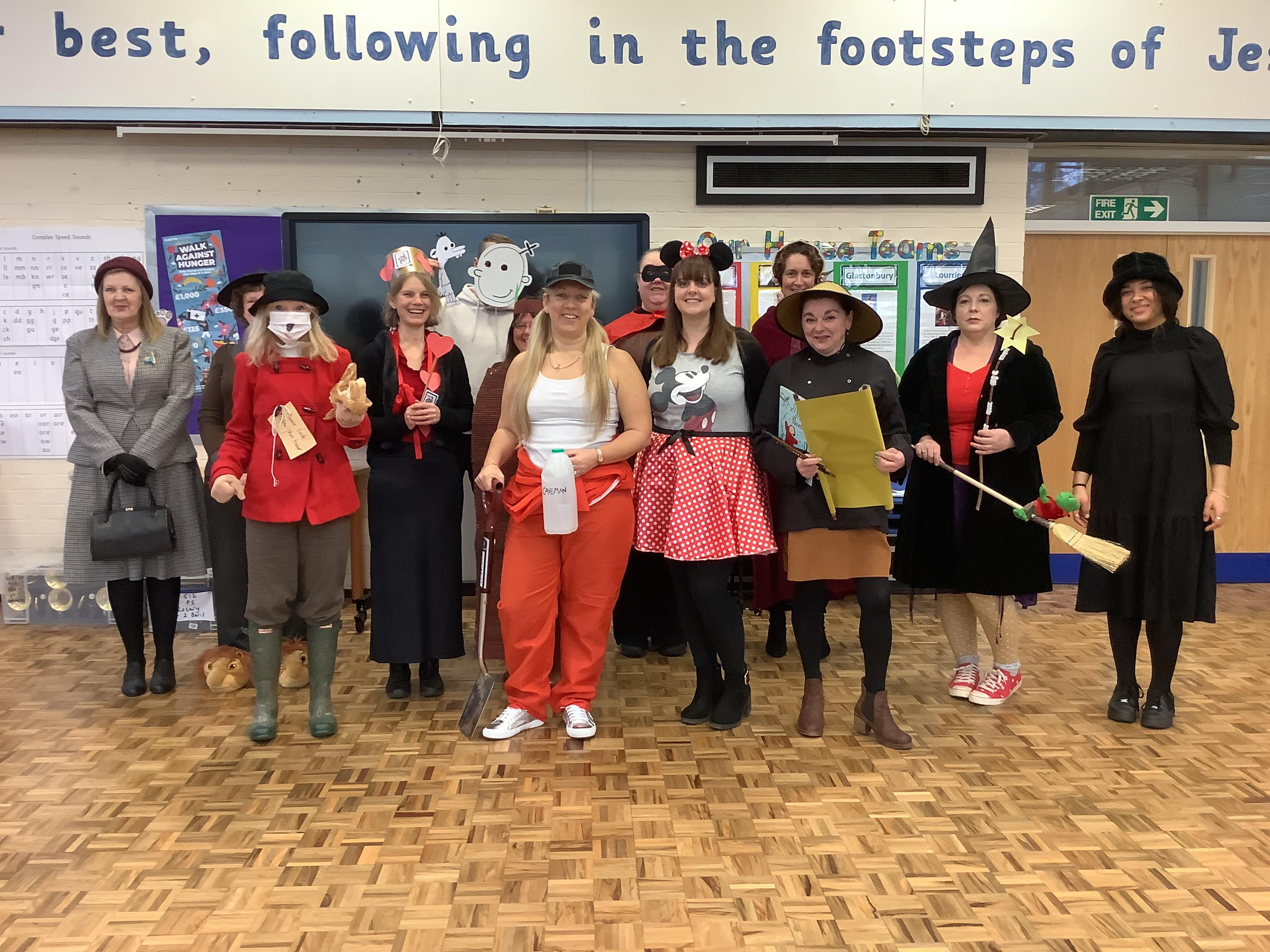
Rosary staff dressed up for World Book Day 2022


